

Client Question: Geopolitical Impact
March 5, 2026
It’s been a stressful few days from a geopolitical perspective given the US and Israel invasion of Iran and the subsequent retaliation and carry-on effects. Without a doubt, there are countless reasons to be concerned from a humanitarian perspective. A client reached out over the weekend and asked how to think about this conflict from an investment perspective.

The answer may surprise you. Typically, from a historical perspective, geopolitical events like the one unfolding right now rarely have a lasting impact on markets. They certainly lead to short-term volatility and price dislocations but over the longer-term, the initial knee jerk reaction to risk assets begins to fade.
This chart has been circulating around social media. It is attempting to illustrate two points – 1) there have been numerous geopolitical events in US history and 2) the upward trend in US equity markets – despite those geopolitical events – over that same time is evident.
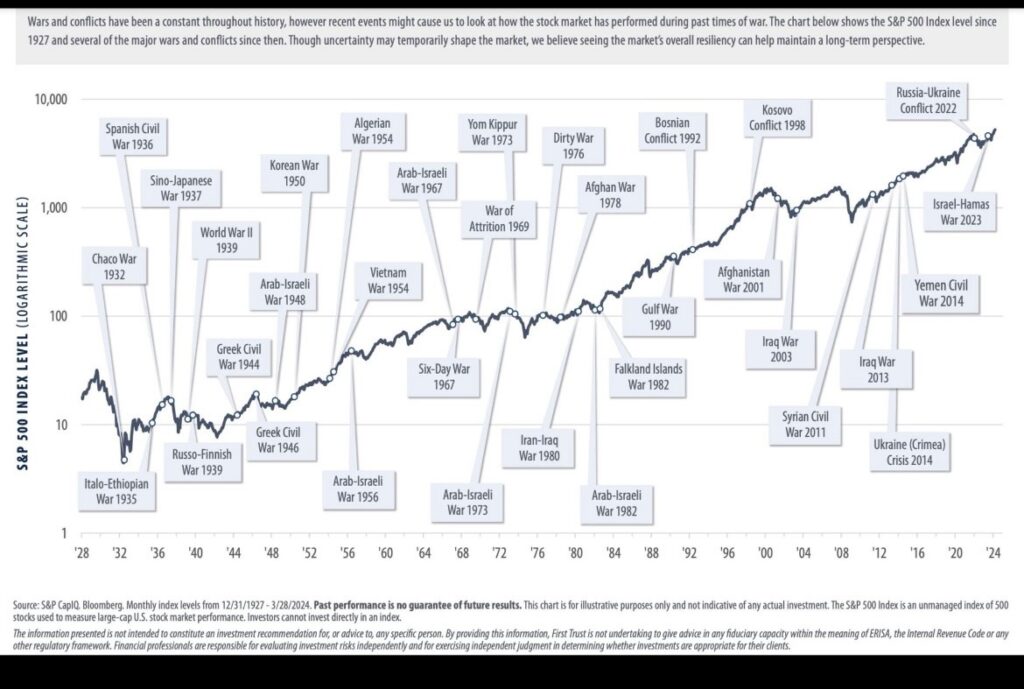
There may of course be initial reactions and temporary dislocations that are worth being aware of with any event, and this one is no exception. In this situation, given the location of Iran and the related effective closure of the Strait of Hormuz (a key shipping channel for oil and natural gas that shippers are understandably not traversing at this time), there is ongoing pressure on energy prices. Interest rates have also been volatile as investors flip between “flight to safety” and inflation concerns due to energy price hikes. Equity prices are also volatile as early-day risk off temperaments seem to be fading into market close. These volatile moves can (and do) present long-term buying opportunities but as always, proceed with caution. Markets are always pricing in the future – so many times, by the time a change is “obvious,” it’s already priced in and can start to move the other way.
The below chart by Blackrock illustrates this point. You can see how Oil, Rates, and US dollar moved in the month before/after an event and 3 and 6 months later. The trends can change quickly and oftentimes do so just as you become convinced of a future path.
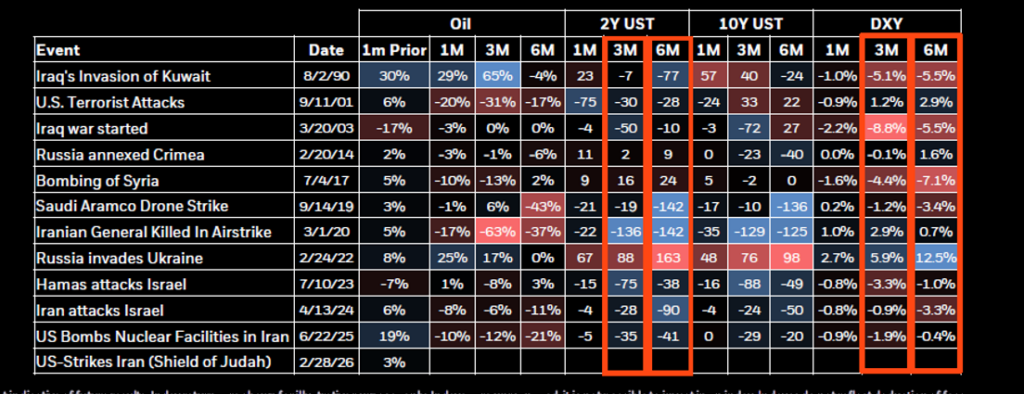
Could this time be different? The length of the Strait closure and the resulting impact on energy prices is the big wildcard. The Strait of Hormuz is a major highway for global energy and a prolonged closure will impact markets much differently than a shortened closure. We don’t know the answer to this question for now so expect volatility and uncertainty to remain.
What can you do? As always, your individual situation is unique and it deserves your attention and evaluation. Just remember – panic is very rarely an investment strategy.

Leave a note